
 From the farm
Why is Kona coffee so expensive?
Kona coffee costs more than almost any other coffee on earth. Here's the honest answer, from a family that grows, picks, and roasts it ourselves.
Kona coffee is known for a smooth, rich flavor that stands apart from coffee grown anywhere else. That reputation comes with a price tag people notice. We get asked about it often enough that we wanted to lay out, plainly, where the cost actually comes from.
Geographic exclusivity
Kona coffee is grown exclusively in the Kona district of Hawaiʻi Island, a narrow, roughly 30-mile strip on the slopes of Mauna Loa. The volcanic soil here, paired with a specific weather pattern of sunny mornings, cloudy or rainy afternoons, and mild nights, creates conditions that are hard to find anywhere else on the planet. That narrow growing region is the first reason supply is limited and cost is high. This strip is known as the Kona coffee belt, and it produces roughly 1% of the world's coffee, making genuine 100% Kona one of the rarest coffees on earth.
Labor-intensive farming
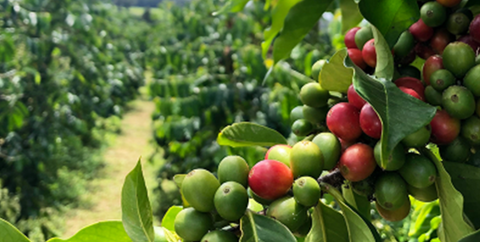
Unlike many coffee-producing regions where mechanized harvesting is common, Kona coffee is predominantly hand-picked. Pickers walk the same trees multiple times over the season, taking only the ripest cherries and leaving the rest to ripen. It's slower and it costs more, but it's the only way to get the quality this coffee is known for.

"You're not just enjoying a beverage — you're experiencing the culmination of ideal growing conditions, meticulous farming, and a deep commitment to quality."
High production costs
Operating a farm in Hawaiʻi costs more than operating one in most other coffee-growing regions. Land, labor, and agricultural inputs all carry a Hawaiʻi price. Add in compliance with U.S. agricultural regulations and the general cost of living here, and the math behind every pound gets steeper before the coffee is even roasted.
Limited supply
The same factors that make Kona coffee distinctive also cap how much of it can exist. Production can't be scaled up without leaving the Kona district or compromising quality, and neither is something we're willing to do. Limited supply, steady demand: that combination keeps prices where they are.
Quality and craftsmanship
We take pride in doing this the traditional way. From hand-picking to careful drying and roasting in small batches, every step is done with attention rather than speed. That craftsmanship is what turns a cherry grown on our hillside into a cup worth the price.

Certification and authenticity
To protect the integrity of the name, genuine Kona coffee must be grown within the Kona district and meet specific quality standards. That certification process adds cost, but it's what lets you trust that "100% Kona" on the label actually means 100% Kona, not a Kona blend.

The cost of Kona coffee
Given all of this, it's no surprise Kona coffee costs more than most coffee on the shelf.
$68.95
per pound, on average, depending on grade and producer
$0.91
per brewed cup, a modest price for one of the world's finest coffees
Join our coffee subscription and it drops to $0.77 per cup.
So when a cup of Kona Coffee costs more, that's the honest arithmetic of a growing region you could drive end to end in under an hour, cherries picked by hand, and care taken at every step in between. Kona is a fraction of one percent of the world's coffee supply. You're not paying a premium for the name. You're paying what it costs to grow coffee somewhere that can't grow much of it.
Kona Mountain Coffee

Comments (0)
There are no comments for this article. Be the first one to leave a message!